
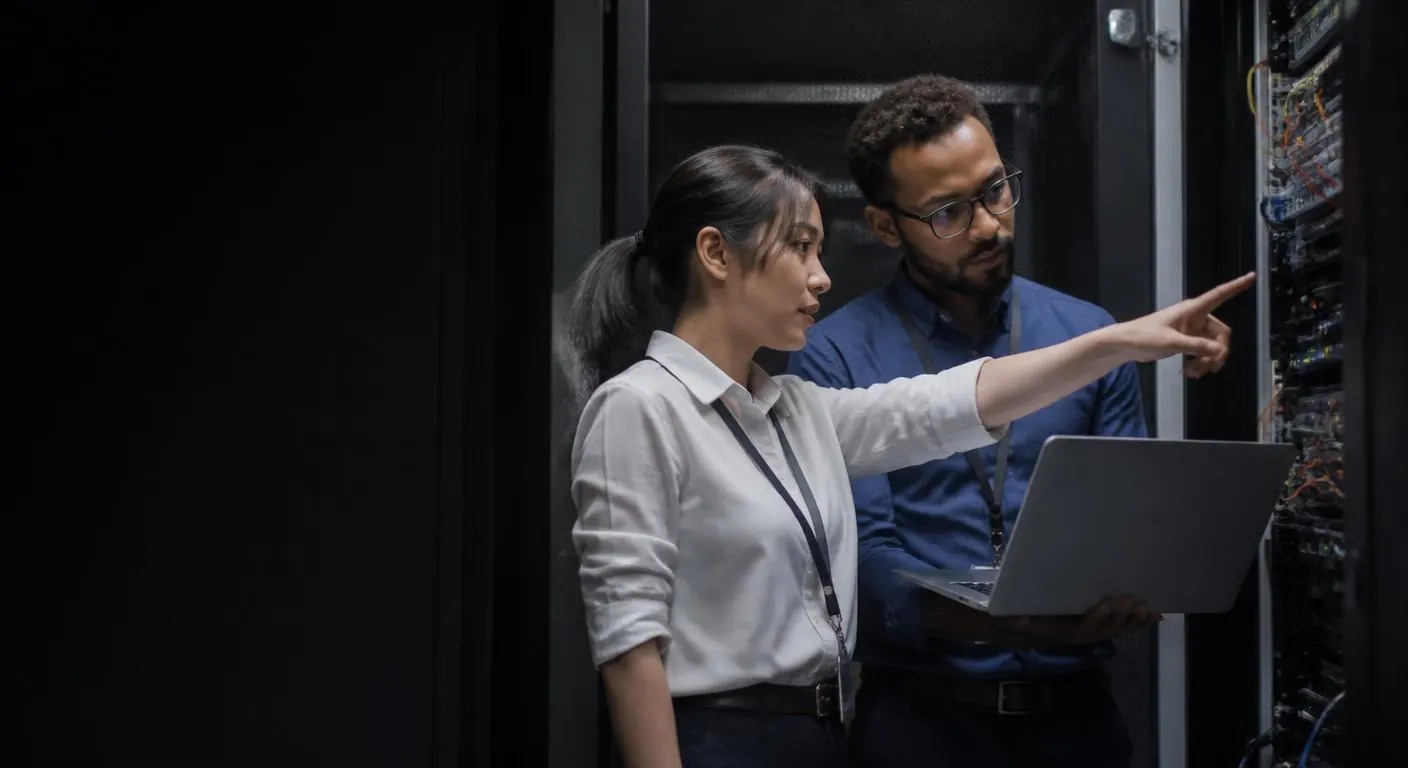
Many regional organizations employ one or two IT people who are genuinely good at their jobs and genuinely overextended. They know the environment better than any outside provider will, and they cannot be experts in firewalls, virtualization, Microsoft 365 identity, backup architecture and security monitoring simultaneously. Co-managed IT addresses that gap without displacing anyone.
What co-managed usually covers
The split is decided deliberately rather than inherited. A common arrangement leaves day-to-day user support with internal staff and moves infrastructure, security and project engineering to the partner.
- After-hours and vacation coverage so one person is not permanently on call
- Security monitoring and response, which needs 24/7 attention
- Server, virtualization, firewall and network engineering
- Backup and disaster recovery architecture and testing
- Project work that would otherwise stall behind daily support
When it is the wrong answer
Co-managed IT does not fix an unclear division of responsibility. If nobody can say who owns patching, adding a second party makes that worse rather than better. It also does not fit organizations with no internal technical staff at all, that is fully managed IT.
Making the split work
Write down who owns each system, agree how work is escalated in both directions, and give both sides visibility into the same documentation. The arrangements that fail are the ones where the boundary was assumed instead of written.