
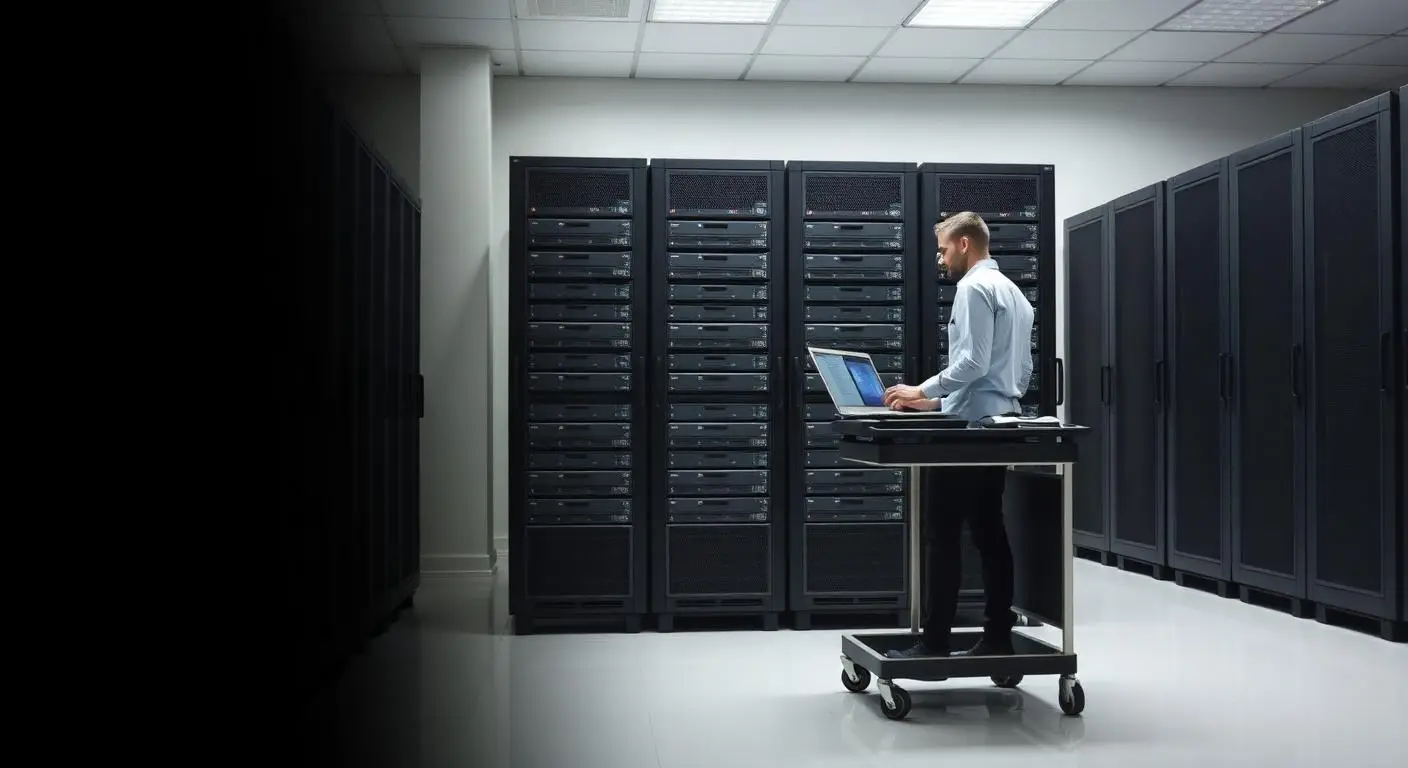
Infrastructure as a Service (IaaS) is the least glamorous cloud model and often the most practical one. Instead of buying a server, housing it, powering it, cooling it and replacing it in five years, you rent the capacity your workloads need.
What you actually get
A typical IaaS arrangement includes:
- Virtual servers sized to the workload, with CPU and memory that can be adjusted
- Enterprise storage, with performance tiers where needed
- Networking and secure connectivity back to your offices
- Backup, and usually disaster recovery capability
- Monitoring and support from the provider's engineers
- Microsoft server licensing for eligible workloads, where the provider participates in Microsoft's SPLA program
Where it fits well
The clearest case is a server replacement decision. Hardware is aging, the quote is large, and the capital budget is contested. IaaS converts that into a predictable operating expense that includes power, redundancy, backup and support.
The second case is legacy applications. Software that requires a Windows server but has no SaaS version can be hosted, letting the organization retire physical hardware without rushing an application replacement.
The third is disaster recovery. Once workloads run on hosted infrastructure, replication and recovery become part of the design rather than a separate project.
Where it does not fit
Workloads that genuinely belong in SaaS should go to SaaS. Email is the obvious example: hosting an Exchange server for twelve people rarely makes sense against Microsoft 365.
Applications requiring specialized local hardware, or extremely latency-sensitive equipment on a plant floor, may need to stay where they are. Honest evaluation matters more than a preference for one model.
Regional versus hyperscale
Hyperscale platforms are extraordinary at elastic, engineered-for-cloud workloads. They are less pleasant for a county office running a state-mandated application, where the requirement is a stable server, a predictable bill and a person to call.
Mayer Networks operates its own datacenter in Carbondale, Illinois, which is the reason regional organizations choose it: the infrastructure has a known location and the engineers have names.