Communications
Take Your Business Extension With You
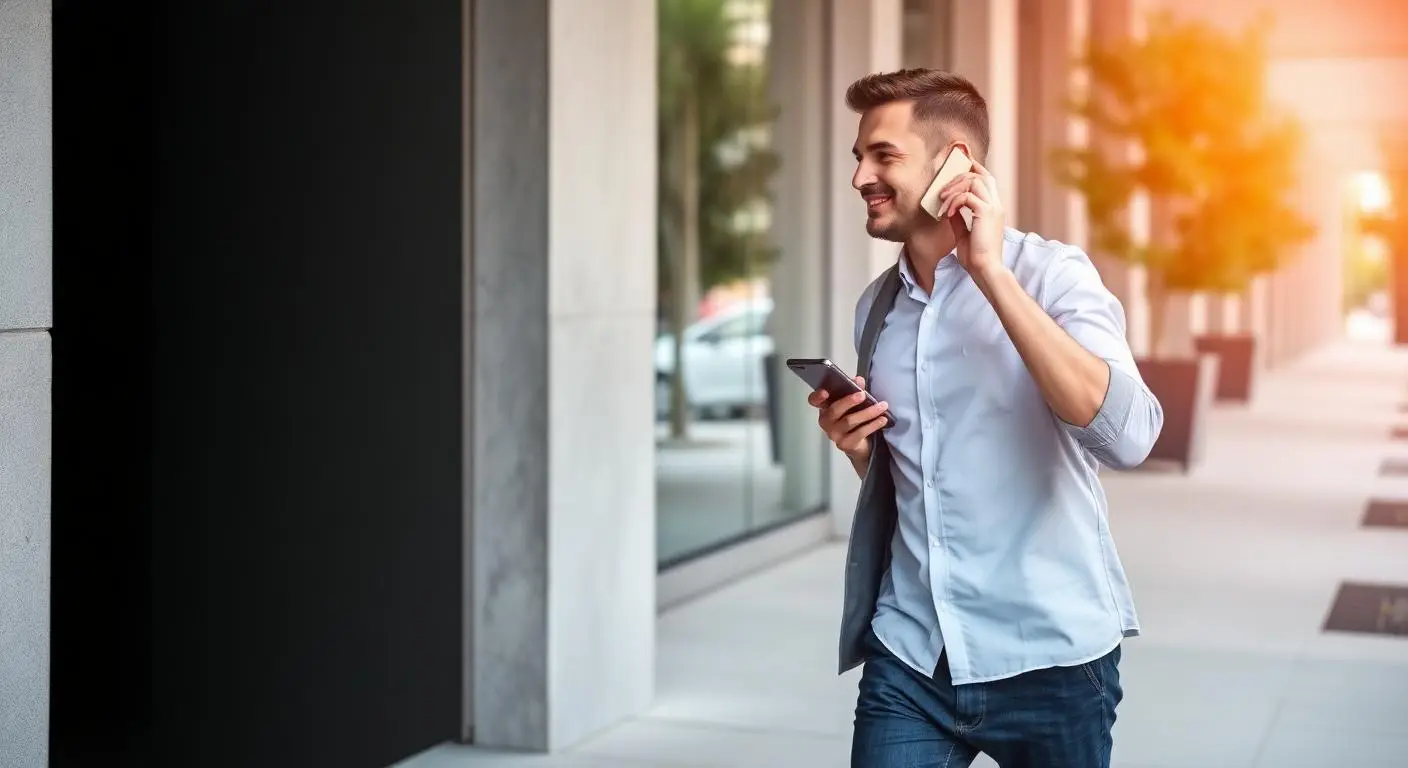
Staff who are rarely at a desk should not have to hand out a personal cell number and hope callers can be transferred later. Supported platforms extend the business phone system to mobile devices, laptops and browsers, so employees place and receive company calls with the business caller ID, stay reachable by extension and remain full members of the phone system wherever they work.
Mobility
Your extension doesn't have to stay at your desk
- Employees use their business extension from a smartphone
- Remote staff stay part of the same phone system, not a forwarded cell number
- Calls follow people between desk, laptop and mobile device
- Business calls go out with the business number, not a personal one
- Callers can still be transferred back to the office
- Teams across several offices work as one organization
One extension, three places
- Desk phone in the office
- Desktop or browser client on the laptop
- Mobile app in the field
Same extension, same business caller ID, same voicemail. Availability of each client depends on the platform selected.
Who this fits
- Field staff, technicians and inspectors who are rarely at a desk
- Remote and hybrid employees
- Organizations whose staff currently hand out personal cell numbers
- Anyone carrying a desk phone's workload on a mobile phone
What breaks first on old phone systems
- Customers reaching an employee's personal mobile number and calling it forever
- Remote staff outside the extension plan, unreachable by transfer
- Voicemail left on a desk phone nobody sits at
- Employees making business calls that show a personal caller ID
What is included
- Mobile applications for iOS and Android where the platform provides them
- Desktop applications for Windows and Mac where the platform provides them
- Browser-based web clients where supported
- Supported IP desk phones for staff who want a physical handset
- Business caller ID on outbound calls from any of the above
- Extension dialing, transfer, hold and voicemail from mobile and desktop clients
- Presence that reflects the user rather than a specific device
How a phone cutover runs
Step 1
Decide who needs what
Some roles need a desk phone, some need only an app, and some need both. Licensing follows the person, not the building.
Step 2
Provision the users
Accounts, extensions and client applications are set up and tested before rollout rather than emailed as a download link.
Step 3
Cover the practicalities
Mobile data behavior, Wi-Fi handoff, battery impact and notification settings get explained during training, because they are what generates the first week of questions.
Step 4
Support it afterward
New phones, replaced devices and new hires are handled as part of ongoing support.
One team responsible
Your phone company should understand your network
Almost every call-quality complaint is really a question about where the problem lives. Is it the handset, the switch, the firewall, the Wi-Fi, the internet circuit or the phone platform? When those pieces belong to three different companies, that question turns into a week of transferred calls and each vendor telling you to talk to the other one.
Mayer Networks manages the phone system and the technology it depends on. One call, one team, one company that can look at the whole path from the person on the phone to the circuit leaving the building.
What we manage underneath the call
- Internet connectivity
- Firewall
- Switching and PoE
- QoS where appropriate
- Wi-Fi
- Desk phones and headsets
- Softphones and mobile apps
- The phone platform itself
No finger-pointing between the phone vendor, the ISP and the IT company, because they are the same relationship.
Supported by people who know your business
Mayer Networks VoIP customers are supported by the same Southern Illinois technology team that manages their network and IT environment. When something goes wrong, the conversation does not start with a national call center reading a script and asking what a firewall is.
Local engineers, remote support for the things that can be fixed remotely, and onsite capability for the things that cannot. Mayer Networks has been supporting organizations in this region since 2006, and the people answering your call already know how your system is built.
What mobility actually changes
The old model tied a phone number to a piece of hardware on a desk. The current model ties it to a person. That sounds like marketing until you watch a practice manager take a call from the parking lot, transfer it to a nurse in another building, and never touch a desk phone. Calls follow the employee, transfers work across locations, and someone away from the office is still part of the phone system rather than a forwarded number.
The tradeoff worth naming is that mobile calling depends on the mobile network or Wi-Fi the device happens to be on. In rural parts of Southern Illinois that is a real variable. We set expectations honestly, configure the client sensibly, and where reliability matters more than mobility we keep a desk phone on a wired connection.
- One business number reaches a person at a desk, on a laptop or on a phone
- Staff stop giving out personal mobile numbers that outlive their employment
- Transfers, extensions and voicemail work the same way from any client
- Presence reflects the person's availability rather than whether a handset is off-hook
Why Mayer Networks
- Staff keep one business identity across desk, laptop and mobile
- Personal mobile numbers stay personal
- Remote employees remain reachable by extension and transfer like anyone else
- One organization accountable for support, engineering, security, infrastructure and communications.
Security considerations
- Client applications tied to managed user accounts rather than shared credentials
- Multi-factor authentication on the communications platform where it is offered
- Device loss handled by disabling the user's client access, not by chasing a handset
- Emergency-calling behavior from mobile and remote clients discussed explicitly during design
Will customers see my personal cell number?
No. Calls placed through the business client present the business caller ID you configure, and inbound business calls arrive through the app rather than to your personal number.
Can I use a computer as my phone?
Yes, with a headset or the machine's microphone and speakers. A desktop softphone or web client behaves like a desk phone: dial, transfer, hold, park, voicemail, presence. Staff who are on calls all day while working in other applications generally prefer it.
Does the app work over cellular data or only Wi-Fi?
Supported clients work over either. Quality depends on the connection, and mobile networks vary across this region, so we cover expectations rather than pretending signal strength is our to control.
What happens to 911 from a mobile app?
Emergency calling from mobile and remote clients behaves differently than from a desk phone at a registered address. We walk through this during design and recommend that staff use the mobile device's native dialer for emergencies unless the platform's configuration for their situation has been verified.
Can remote employees be in call queues and ring groups?
Yes on supported platforms. A remote user is an extension like any other, so they can sit in a queue, appear on a BLF key and receive transfers.
Let's talk about your technology
Tell us what you are running and what is not working. We will tell you plainly what we would do about it.